
What Is Shea Butter—and Why Does Dry Skin Love It?
Discover what shea butter is, why dry skin loves it, and how to use this rich, natural ingredient to keep your skin soft and protected as the weather cools.
INGREDIENTS
9/29/20263 min read

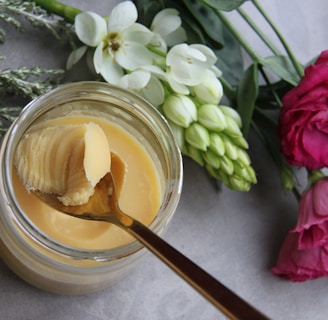
If you've ever flipped over a moisturizer, lip balm, or body cream and scanned the ingredient list, there's a good chance you've seen shea butter (sometimes listed as butyrospermum parkii). It's one of the most popular natural ingredients in skincare — and for good reason. Especially as the air turns cooler and drier, shea butter is one of the best friends your skin can have.
Here's what it actually is, what it does, and how to get the most out of it.
What Is Shea Butter?
Shea butter is a natural fat that comes from the nuts of the shea tree, which grows across West and Central Africa. The nuts are harvested, dried, crushed, and slowly processed to release the rich, creamy butter inside.
For centuries, shea butter has been used in its native regions to protect skin and hair from harsh sun, wind, and dry climates. Much of it is still produced by women's cooperatives, where it's an important source of income — which is one reason many clean-beauty brands value sourcing it responsibly.
At room temperature, shea butter is solid, but it melts on contact with your skin. That "melt-in" quality is a big part of why it feels so luxurious.
What's Inside Shea Butter?
Shea butter is packed with ingredients your skin recognizes and loves:
Fatty acids (mainly oleic and stearic acid), which soften skin and help reinforce its natural barrier
Vitamins A and E, which offer antioxidant support
Natural plant compounds that have soothing properties, which is why shea often shows up in products for sensitive or irritated skin
Why Dry Skin Loves It
Dry skin usually has two problems: it isn't holding onto enough moisture, and its protective barrier isn't as strong as it should be. Shea butter helps with both.
It softens and smooths. Shea is an emollient, meaning it fills in the tiny gaps between skin cells that make dry skin feel rough. The result is skin that instantly feels softer and looks smoother.
It locks moisture in. Shea forms a light, breathable layer on the skin that helps slow down water loss. That's especially helpful in fall and winter, when dry air and indoor heat are constantly pulling moisture out of your skin.
It supports your skin barrier. The fatty acids in shea are similar to the natural lipids in your skin, so it helps reinforce the barrier that keeps moisture in and irritants out. (For more on why your barrier matters so much, check out The Skin Barrier 101: What It Is and Why Simplicity Wins.)
It's gentle. Shea butter is well tolerated by most skin types, which makes it a great choice for sensitive, reactive, or easily irritated skin.
Where Shea Butter Shines Most
Shea butter works beautifully anywhere your skin tends to get dry, rough, or chapped:
Body. Legs, arms, elbows, knees, and heels are often the first spots to feel the effects of cooler weather. A rich body butter like the Firming Body Butter, made with shea and cocoa butters, melts into skin and leaves it soft and smooth — plus its caramel and coconut scent feels perfectly cozy for fall.
Lip color. You don't have to choose between color and comfort. The Cosmo Lipstick is made with shea butter and natural oils, so it conditions your lips while adding a pretty rosy pink.
How to Get the Most Out of Shea Butter
Apply to damp skin. Right after showering or washing, pat your skin lightly and apply your shea product while it's still a little damp. This helps seal in extra hydration.
A little goes a long way. Warm a small amount between your palms before applying — it spreads more easily and absorbs better.
Use it overnight. For very dry hands or feet, apply a generous layer before bed and slip on cotton gloves or socks. You'll wake up to noticeably softer skin.
Layer it last. Rich butters work best as the final step, on top of lighter, water-based products.
Is Shea Butter Right for Everyone?
For most people, yes. A couple of things to keep in mind:
Acne-prone skin: Shea is generally considered low risk for clogging pores, but very rich products may feel heavy on oily or breakout-prone faces. If that's you, save shea-heavy products for your body, hands, and lips, or look for lighter face formulas where shea is one ingredient among many.
Nut allergies: Shea comes from a tree nut. Reactions are rare, but if you have a tree nut allergy, check with your doctor first.
Patch test: As with any new product, try a small amount on your inner arm and wait 24 hours before using it more widely.
The Bottom Line
Shea butter has stood the test of time because it simply works. It softens, protects, and helps dry skin hold onto the moisture it needs — all while being gentle enough for most skin types. As the weather cools, it's one of the easiest ingredients to lean on for comfortable, glowing skin from head to toe.
Have a question about an ingredient you've spotted on a label? Feel free to reach out, or come chat about it in our VIP Community on Facebook.
Naturally Clean & Glowing with Dee
Honest beauty guidance for real women.
© 2026 Naturally Clean & Glowing with Dee
Honest advice for real women